
Analysis · Husiler - Yemen
From Yemen’s Margins to the Regional Stage: The Houthis’ Meteoric Rise
Ensarullah adıyla da bilinen Husiler, Şii İslam'ın azınlık kollarından biri olan Zeydilik geleneğinden doğmuş, dinî ve siyasi ihya düşüncesini benimseyen…

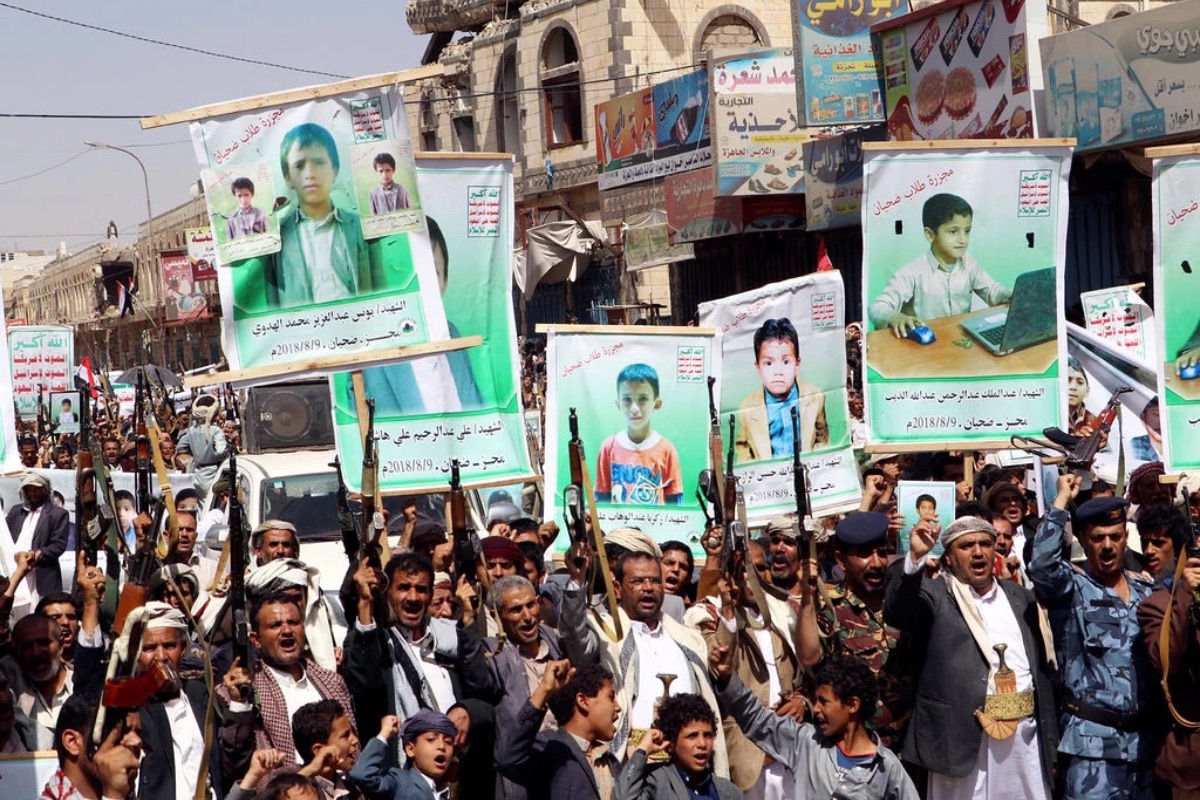
The lightning offensive launched by Houthi fighters in southern Yemen, along the Red Sea coast and towards the approaches to the strategically vital Bab-el Mandeb, has propelled this Yemeni political-religious-movement into the international media spotlight. But who exactly are the Houthis, and how can we account for the meteoric rise of a movement long confined to the margins of Yemeni political power ?
I. The Origins and Local Emergence of the Houthis
The Houthis, also known as Ansar Allah, are a politico-religious revivalist movement rooted in Zaydism, a minority branch of Shia Islam. Based in northern Yemen, principally in the mountainous and historically dissident governorate of Saada, the movement initially articulated communal grievances that gradually acquired an increasingly sectarian character in the early 2000s.
The movement succeeded in bringing together, organising and channelling a range of grievances fuelled by a sense of political marginalisation and the underdevelopment of the northern peripheries, as well as by the perceived decline of Zaydism in the face of expanding Salafi and Wahhabi currents supported by Saudi Arabia. The establishment of the Salafi centre at Dammaj, in the very heart of Saada, during the 1980s became one of the principal symbols of this religious rivalry. The consequences of such sectarianism continue to be felt across Yemen today.
In the early 2000s, Yemen’s president, Ali Abdullah Saleh, nicknamed "Little Saddam" by hisdetractors, aligned himself with the American-led "War on Terror", despite his alleged closeness to Saddam Hussein in the early 1990s. Regarded as an important partner by the Bush administration, Saleh presided over a period in which the FBI opened an office in Sanaa to combat al-Qaeda.
It was against this backdrop of rapprochement between Sanaa and Washington that Hussein al-Houthi intensified his mobilisation efforts. In the wake of protests sparked by the American intervention in Iraq, and echoing the calls of Iraqi Shia cleric Muqtada al- Sadr, he organised gatherings at which the sarkha, a political and religious slogan which gradually spread, eventually becoming one of the movement’s defining identity markers.
Tensions escalated into armed confrontation in 2004, when Hussein al-Houthi was killed by Yemeni armed forces following a three-month siege. His death ushered in a succession of wars between Saleh’s forces and the Houthis from 2004 to 2010, punctuated by intermittent truces. The Houthis were accused of seeking to restore the Zaydi imamate and undermine the republican regime. In fact, the Saleh regime adopted an exclusively sectarian interpretation of events at a time when the notion of a “Shia Crescent” was gaining currency following its introduction into regional political discourse by King Abdullah II of Jordan.
Yet, in the face of the most radical religious movements and al-Qaeda in the Arabian Peninsula (AQAP), the Houthis were able to present themselves as a force capable of attracting segments of public opinion committed to civil liberties, as well as constituencies drawn from the political left. Their denunciation of corruption under the Saleh and subsequently Hadi administrations enabled them to appropriate the anti-corruption agenda and portray themselves as opponents of a discredited political order.
This capacity to mobilise disparate constituencies rested in part on the social consequences of widespread impoverishment. The movement drew support from some of the most financially vulnerable groups: populations dispossessed of their land following agrarian transformations, internal migrants moving towards Saada and Sanaa, and workers expelled from Saudi Arabia. To these constituencies, the Houthis offered a discourse centred on economic justice, redistribution and a more equitable allocation of resources, at times drawing upon a markedly egalitarian social imaginary.
II. The Houthis and Iran: Beyond the “Proxy” Label
Although Riyadh had described the Houthis as an “Iranian proxy” as early as 2009, during the Saada wars, an American diplomatic cable at the time assessed Tehran’s influence in Yemen as being largely confined to informal religious ties between Iranian and Yemeni scholars.
Signs of rapprochement nevertheless multiplied from 2012 onwards. In January 2013, the United States Navy intercepted the Jihan I, an Iranian dhow carrying nearly forty tonnes of military equipment intended for the Houthis. This process accelerated in 2014, marking a decisive turning point, with an intensification of expertise transfers, political support for the capture of Sanaa, visits by Houthi delegations to Tehran, and the establishment of air links between the two capitals.
The “Iranian proxy” designation, frequently attached to the Houthis, was also reinforced by statements from Iranian officials, notably former Tehran mayor Alireza Zakani, who presented Sanaa as the “fourth Arab capital” to have entered Tehran’s sphere of influence after Baghdad, Beirut and Damascus.
Such an interpretation, however, remains reductive. The Houthis are first and foremost a Yemeni actor, emerging from local political, social and religious dynamics. For much of their history, their principal demands concerned Yemen’s domestic political order and, in their relationship with Riyadh, the cessation of Saudi military operations and the lifting of restrictions imposed on the country.
It is therefore essential not to reverse the direction of causality: rather than having created or orchestrated the Houthi insurgency, Iran appears primarily to have exploited a pre-existing local movement to acquire strategic depth in the Arabian Peninsula at relatively low cost. This calibrated involvement in the Yemeni conflict has enabled Iran to maintain a capacity to exert pressure on, and disrupt, Saudi Arabia. Yet the relationship can hardly be understood as one of command and control.
There have been notable instances of Houthi non-alignment with Iranian preferences. In 2019, for instance, the movement announced a unilateral ceasefire with Saudi Arabia at a time when Iran favoured escalation. In parallel, the Houthis sought to diversify their supply chains notably by turning to Chinese suppliers of components, thereby reducing their dependence on Iran.
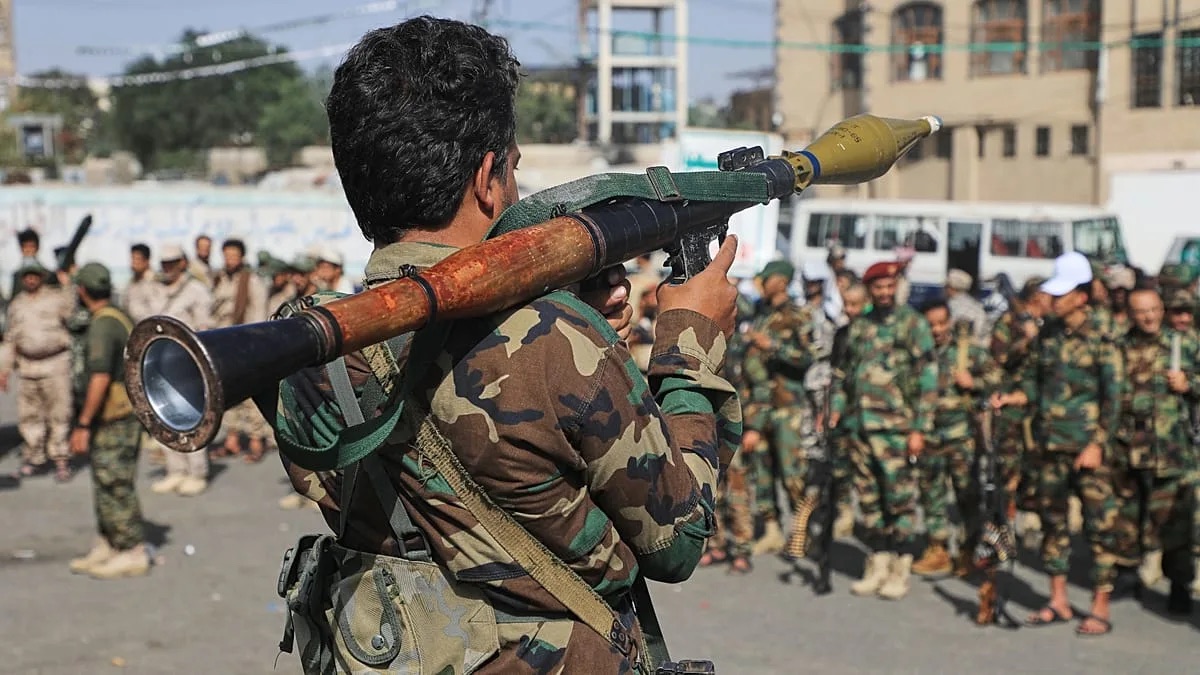
Unlike the institutionalized and deeply embedded relationship linking Iran to Hezbollah or certain Iraqi militias, Tehran's partnership with the Houthis remains comparatively loose, notwithstanding Houthi identification with the rhetoric of the "Axis of Resistance" and their shared ideological affinities with the Iranian leadership, including anti-Americanism and hostility towards Israel.