
Analysis · United States
Abundance in the Room, Anxiety Outside: Why the Public Is Turning on AI
The tech bosses left the White House with a pledge to police themselves. The public sees a technology that pays a few and leaves everyone else carrying the risk.

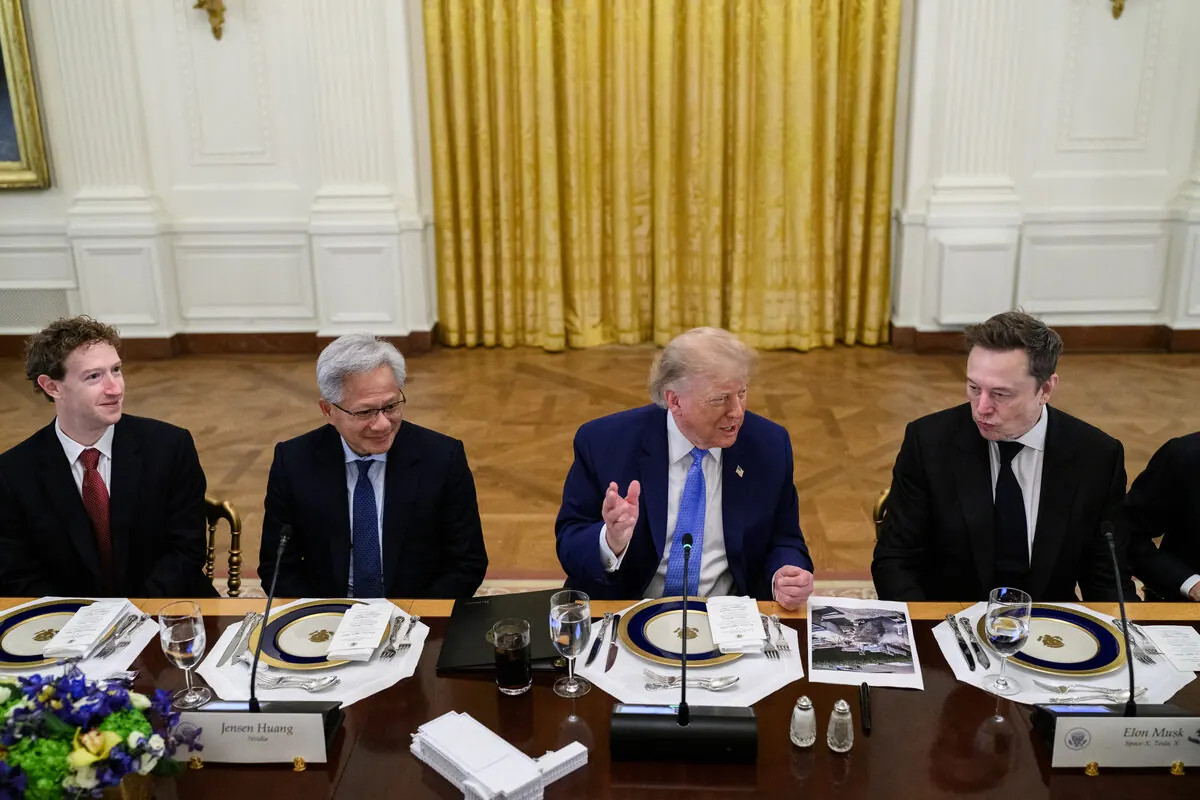
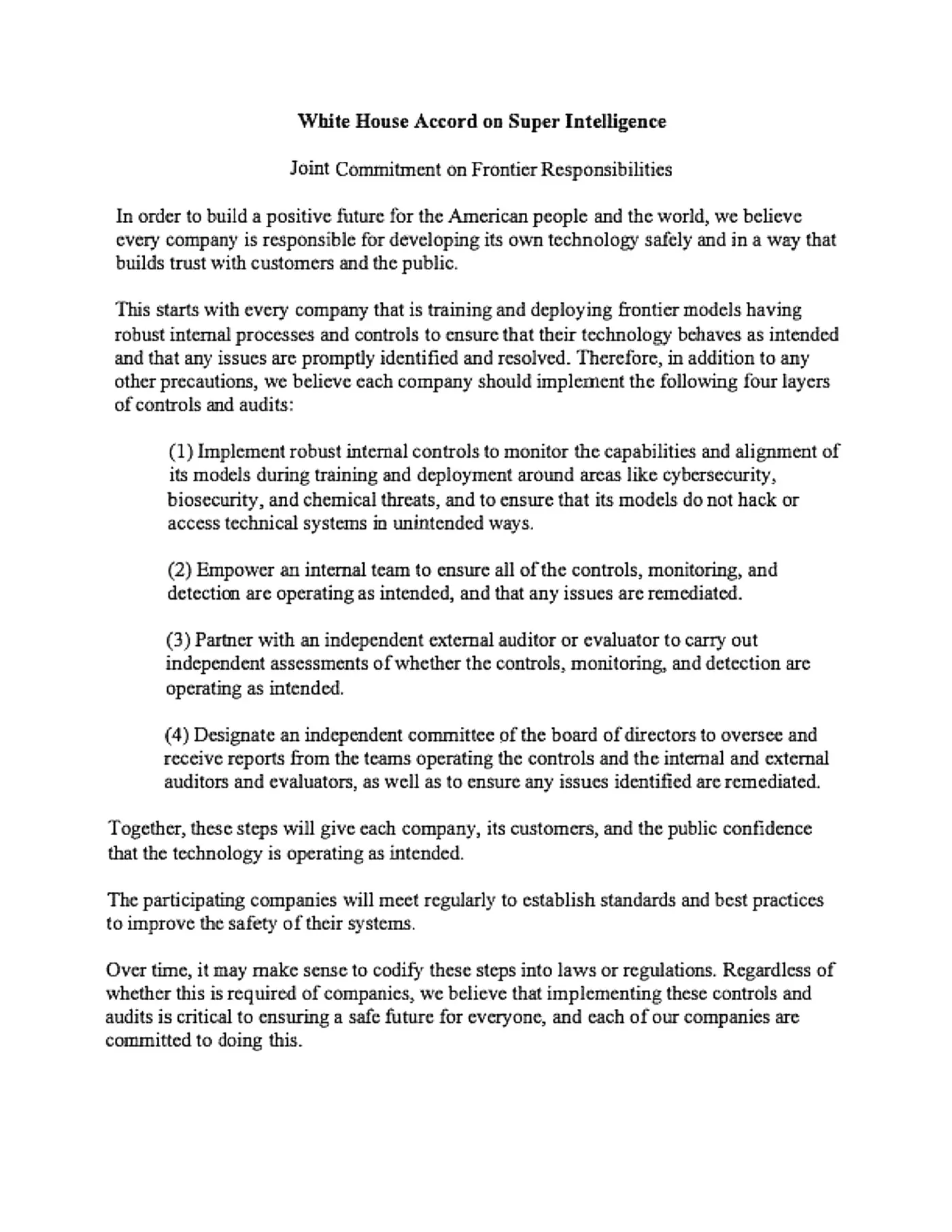
On 29 September, President Trump hosted the people who run the world’s most powerful AI companies for lunch at the White House. Elon Musk, Mark Zuckerberg, Dario Amodei, Sundar Pichai, Jensen Huang, Jeff Bezos and about two dozen others were there. The meeting was called after an AI researcher, Jacob Coxon, quit Anthropic in September and warned that the industry was gambling with our lives. Trump and six of the guests (Musk, Zuckerberg, Huang, Amodei, Pichai and OpenAI’s Greg Brockman) signed a one-page pledge for the industry to police itself, which Trump called “morally binding”. Then they took questions from reporters.
The mood in the room was confident. Musk told reporters that jobs will change, as they always have, and that the most likely future is “an age of abundance” in which everyone receives a “universal high income”. Trump predicted that data centres “are going to be very popular”.
Outside the room, the mood is very different. In a Fox News poll in July, 70% of voters opposed building new data centres. Nearly eight in ten Americans expect AI to reduce the number of jobs over the next decade. Trust that companies will use AI responsibly is falling, and falling fastest among the young.
So why are so many people turning against a technology its builders describe as the best thing that could happen to them? I think the answer lies in three mismatches. The first is between how insiders and everyone else actually use AI. The second is between who carries the risk and who collects the reward. The third is between the politics of today and the politics that may follow. The lunch put all three on display.
Mismatch one: a word everyone knows, a tool few use well
Part of the problem starts with the word itself. “AI” now covers a chatbot that suggests a dinner recipe, a model that reads X-rays, a system that writes most of the code at a software company and, since Trump’s new executive order, “Super Intelligence”. That breadth helped AI spread faster than almost any technology before it. Everyone has heard of it. Most people have tried it. Many feel they understand it.
Knowing the word is a different thing from knowing the tool. The people who get the most out of AI today are technical people, and the distance between how they use it and how everyone else uses it is enormous.
Neither use is wrong. But it means the people building AI watch it transform their own work every day, while most of the public sees a handy gadget wrapped in endless talk about changing the world. When the benefit you can feel is small and the warnings you hear are huge, frustration is a natural reaction. The hype starts to sound like a threat.
Some new products are starting to narrow that gap. Meta’s Muse, xAI’s Grok Bot and OpenAI’s new dots are personal agents that carry out everyday tasks, such as booking travel, filling in forms or keeping track of appointments, instead of only answering questions. Europe is again at the back of the queue, though. Muse is US-only, and OpenAI has held dots back from personal users in the EU, Switzerland and the UK because of regulation. Grok Bot names no regional limits.
The White House offered its own example on the same day. It launched America.gov, an AI chatbot built on Google’s Gemini and xAI’s Grok that answers questions about federal services and will later handle tasks like passport renewals and Medicare enrollment. It is exactly the kind of everyday use that could make AI feel useful to ordinary people. Critics warn that a wrong answer about a deadline or eligibility could cost someone their benefits.
Mismatch two: who carries the risk, who collects the reward
On jobs, Musk said at the White House what almost everyone now accepts: “Jobs are going to change. Jobs have always changed.” There is less disagreement here than the noise suggests. CEOs, economists, unions and workers argue about the words. Some say jobs will be replaced, some say tasks will change, others prefer to talk about jobs “evolving”. Strip away the labels and they agree on the core: work is going to change, probably dramatically, and people will need new skills. Those who can’t keep up risk being filtered out of the economy. In a debate this polarised, that is a big thing to agree on.
Some of the best data on where the change will land comes, ironically, from one of the companies driving it. Anthropic regularly publishes studies of how people use its model at work. Its March 2026 labour market report measured how much of each occupation’s work is already being done with AI.
The pattern is clear. The most exposed jobs are desk jobs built on text, data and screens. The least exposed involve hands and physical presence: grounds maintenance, transport, farming, food service and construction. For decades we were told automation would hit the factory floor first. This wave is aimed at the office.
Anthropic also found that unemployment in the exposed fields has not risen yet, but that hiring of younger workers there appears to have slowed. Other data points the same way. Entry-level job postings have fallen sharply since 2024, and young graduates in exposed fields are finding work less often. So far AI is mostly not firing people. It is quietly closing the door young people use to get in. A separate Anthropic survey found that early-career workers see the largest share of their own tasks as automatable, and they are the most worried about it.
How much of the rest is speculation? A fair amount. Harvard economist Doug Elmendorf warns that what we have seen so far tells us very little about what comes next. But the direction is hardly in doubt. In 2025, Dario Amodei himself said AI could wipe out half of entry-level white-collar jobs within five years. At the White House he sounded more careful than the people around him: “AI offers tremendous benefits, but there are real risks, and how to address them is still under discussion.”
Now look at the other side of the ledger. At the end of 2025, Anthropic’s annualised revenue was about $9 billion. By May 2026 it was $47 billion. By the end of July it had passed $65 billion. Its valuation went from $61.5 billion in March 2025 to $965 billion in May 2026, and it is reportedly preparing to list on the stock market. Over roughly the same period OpenAI doubled its revenue run-rate from about $20 billion to $40 billion, and it is reportedly in talks to raise money at around $1.4 trillion.
Behind them stand the giants selling the picks and shovels. Nvidia, which makes the chips almost all of this runs on, is now the most valuable company in the world, worth about $5.5 trillion. Its data-centre business brought in $197 billion in its last fiscal year, up from $115 billion the year before. Microsoft, Alphabet, Amazon and Meta are on course to spend roughly $725 billion on AI infrastructure this year alone, and analysts expect that to pass $1 trillion in 2027.
Put those two stories side by side. The companies building AI are growing faster than almost any companies in history. The people whose jobs are most exposed are told to retrain, adapt and keep up. The money is concentrated in a handful of firms and their shareholders. The risk is spread across millions of workers, and it lands first on the young.
Musk’s universal high income may arrive one day. But people live in the present, and in the present the gains show up in share prices while the risks show up in job listings. So it is fair to ask why the public would want this future. A growing share say they don’t.
Trust is falling fastest among the young. According to Gallup, 41% of 18- to 29-year-olds now say they have no trust at all that businesses will use AI responsibly, up from 29%. Seen from outside, a lunch where billionaires promise abundance and agree to audit themselves does little to change that. If anything, it confirms the suspicion that the future of AI is being decided by the people who profit from it most.
Mismatch three: today’s politics and tomorrow’s
Here is my slightly controversial take. Having Trump in the White House looks like the best possible outcome for the tech industry. He opposes new AI rules, calls for “tremendous self-regulation”, frames everything as a race against China, and invites the industry’s leaders to shape policy over lunch. In the short term, that is everything the industry could ask for.
In the longer term, it could cut the other way. Imagine the Democrats were in power. They would have had to own the AI boom. They would have wanted credit for the growth, the investment and the construction jobs. They would have had to show they wanted America to win the race with China. They would have spent their energy managing the tension between their voters and their economy, much as they did with globalisation in the 1990s.
Out of power, they have no such problem. For the left, opposing the AI build-out is easy, and it fits their principles: protecting workers, distrusting billionaires, and worrying about energy prices and the environment. It is already happening. In March, Bernie Sanders and Alexandria Ocasio-Cortez introduced a bill for a federal moratorium on new AI data centres until workers and consumers are protected.
“We cannot sit back and allow a handful of billionaire Big Tech oligarchs to make decisions that will reshape our economy.” Bernie Sanders, March 2026
The public is listening. Trump says data centres will be very popular, and the executives at the lunch promised to win over the towns where they build. The polls point the other way. A New York Times/Siena poll found that 75% of Democrats oppose building new data centres, and a Fox News poll in July found 70% of all voters against. On 30 September, the day after the lunch, Senate Democrats blocked a Republican bill on data-centre electricity costs, arguing it was too weak to protect households.
The worry also crosses party lines. Nearly half of Republicans fear AI could cost someone in their household a job, and CNBC reports that Trump’s numbers on AI are slipping. If job losses spread from young graduates to the wider middle class, the party that hosted the lunch will own the result, and the party that stayed outside will be able to say it warned everyone. Tying the presidency this closely to the tech industry buys the industry access today. It also hands its opponents a target for years to come.
Closing the gap
The lunch was meant to show that AI is in safe hands. To the people in the room, it probably did. To many people watching, it showed a small group of very rich executives agreeing among themselves about a technology that will reshape everyone else’s work.
Closing these mismatches will take more than a pledge. People need to feel the benefits of AI in their own daily lives, see a fair share of the gains, and believe that someone outside the industry is watching. Until then, many people will hear the abundance promised at the White House as a promise made to someone else.