
Analysis · Türkiye · Somalia
In Somalia, Ankara is taking the lead in rebuilding the armed forces.
To address the security threats it faces, Somalia needs the support of its Turkish partner, which seeks to maintain its economic influence in the region.

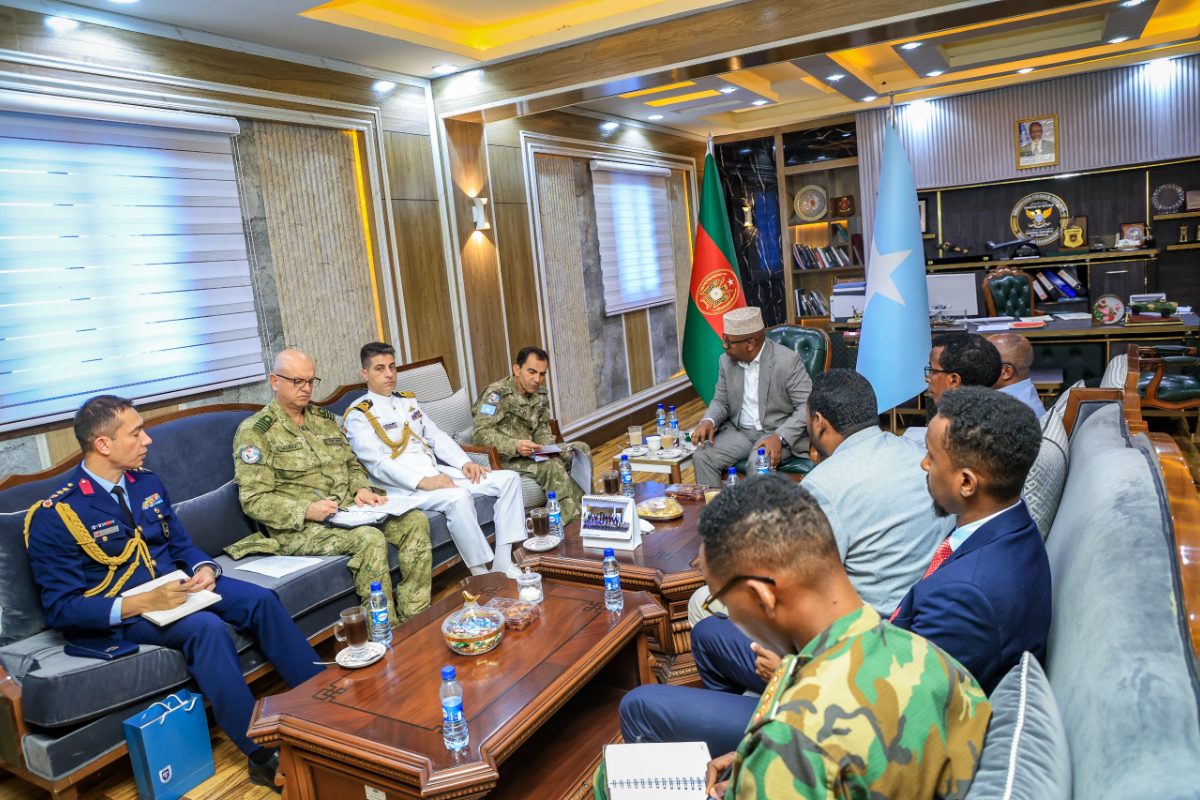
Military cooperation between Turkey and Somalia is growing stronger. In Mogadishu, on September 21, Defense Minister Ahmed Moalim Fiqi received a Turkish military delegation led by Major General Sabahttin Kalkan, commander of TURKSOM. Behind this name lies Turkey’s largest military base abroad, located just 10 km from the Somali capital. Inaugurated with great fanfare on September 30, 2017, after two years of construction that cost nearly $50 million, this 400-hectare facility provides the foundation for Turkey’s substantial projection capability in the Arabian Sea and the Indian Ocean.
This is also where the restructuring of the Somali military is taking place. Every year, Turkish instructors help train various categories of military personnel, including soldiers, noncommissioned officers, and officers. This effort also extends to elite units. For example, the Somali Gorgor commandos receive specialized training designed to counter the threat posed by Al-Shabaab, an Al-Qaeda-affiliated terrorist group that is very active in the region.
Far from representing a new milestone in Turkish-Somali relations, this renewed defense partnership is, in fact, a perfectly logical continuation of existing ties.
For Turkey, its relationship with Somalia is not limited to mere promises of technical and military assistance; above all, it underpins the foundations of a strategy of influence that has evolved over the years. In this sense, it is a classic example of what the Austro-American Ernst B. Haas calls the “spillover effect”: cooperation between two countries in one area tends to become institutionalized and then extend to other areas of cooperation. This logic applies here as well: the relationship between the two countries was not initially built on arms deliveries and the deployment of training officers.
From Humanitarian Aid to Military Aid
In 2011, a severe drought struck Somalia, leading to a famine and a major humanitarian crisis.
At a time when East African countries seem to be shunning the West, Turkish President Recep Tayyip Erdogan’s 2011 visit to Mogadishu came at just the right moment. It provided an opportunity to draw international attention to the disaster on the ground, ushered in a new dialogue between the countries, and allowed Turkey to gain a foothold in East Africa.
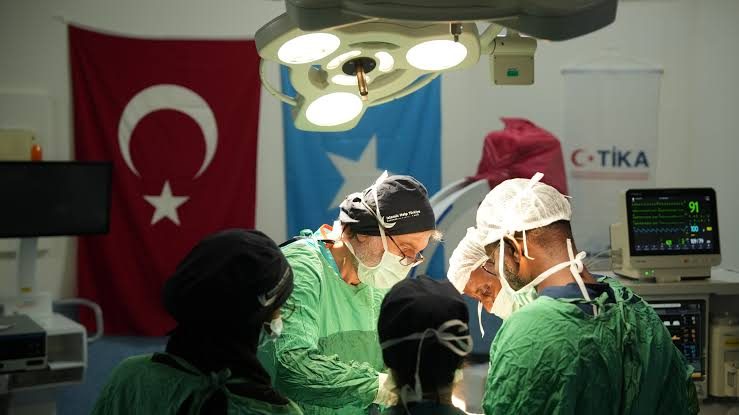
The nature of the aid provided by Ankara had two aspects. First, it addressed immediate needs for food, shelter, and medical care. Civil society organizations, particularly the Turkish Red Crescent, were mobilized to provide assistance to the victims.
Gradually, humanitarian aid also evolved into reconstruction assistance. Through TIKA (the Turkish Cooperation and Development Agency), Turkey was able to focus its efforts by establishing a coordination office for the Mogadishu program, working in particular on digging wells and building military hospitals… (while extending its aid to the self-proclaimed state of Somaliland and the semi-autonomous region of Puntland).
However, what made Turkey’s support in this matter unique was that it went beyond humanitarian aid in the strict sense. Gradually, TIKA expanded into the field of development aid, helping to restructure the public health system not only through material assistance but also by transferring expertise. Thus, in the same year following the Turkish president’s visit, medical students were sent to Turkey to complete their training. Turkey is therefore no stranger to the role of trainer; the only difference from today is that it now does so abroad.
A crucial Military Cooperation for Somalia
Just as in 2011, the support provided in 2026 comes at a time when the security situation in Somalia is critical.
While the U.S. Africa Command (AFRICOM) has been conducting a series of airstrikes alongside the federal government since last August, the terrorist group Al-Shabaab continues to strengthen its foothold. Between June and August 2026, the Shabeellaha Hoose region, on the outskirts of Mogadishu (to the north and west), saw an intensification of attacks, with a 60% increase compared to the period from January to May 2026.
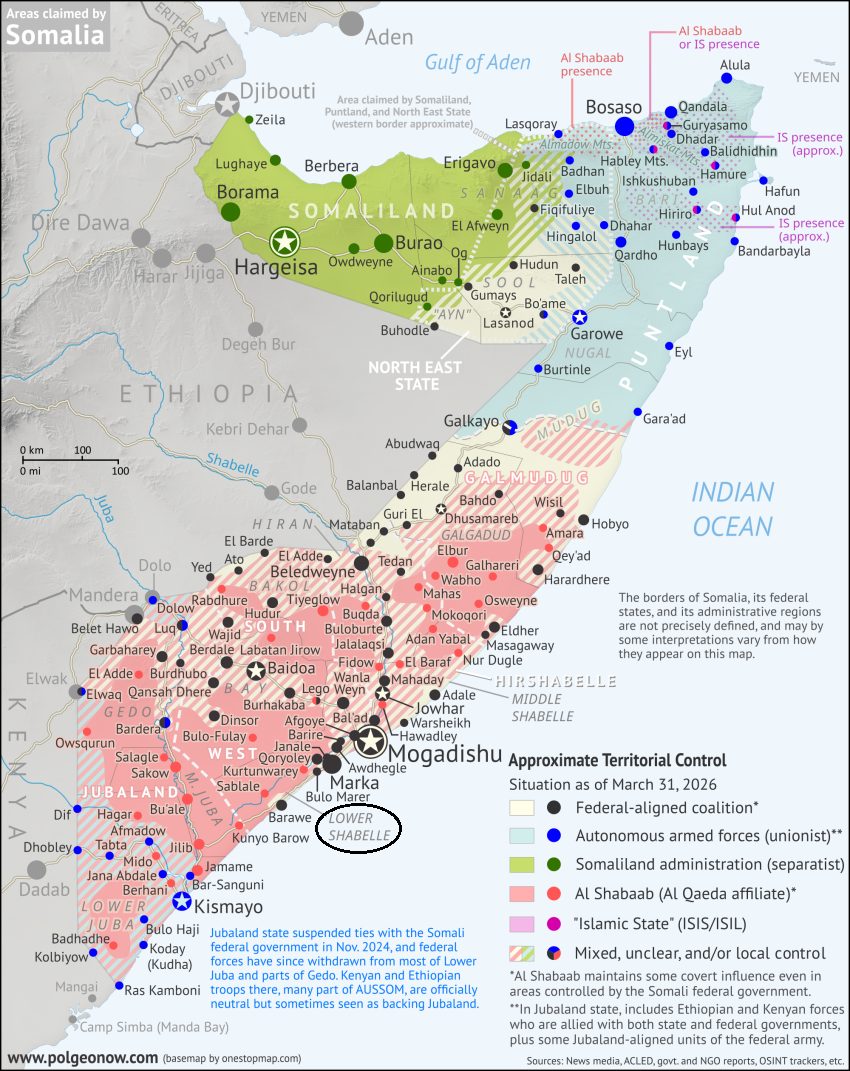
The group retains a significant capacity to carry out attacks, cut off supply routes, conduct ambushes, and target political and civilian leaders. However, beyond the mere physical threat, Al-Shabaab seeks to undermine the legitimacy of the state as part of its effort to enforce strict Islamic law.
The group is not alone in this effort. Security forces are struggling to weaken Islamic State positions in the mountainous and remote areas of Puntland, in the northeastern part of the country. According to the U.S. research center Critical Threats, the group resumed its activities in the spring of 2026 after suffering heavy losses during the first phase of Operation Hilaac, launched in 2024. As is always the case in crisis situations, both groups are taking advantage of poverty and clan rivalries.
Added to this are the separatist movements in the north, supported by Ethiopia: Somaliland continues to break away from Mogadishu, while Puntland appears to want to maintain a certain degree of autonomy, though this status quo remains fragile. So that is where we stand: after 13 years of civil war (1978–1991), the situation in Somalia remains highly complex. However, it is not in Ankara’s interest to sit idly by, especially given the significant economic stakes for Turkey.
A Two-Way Relationship: Turkish Economic Interests in Somalia
On February 22, 2024, a 10-year defense agreement was signed, enabling Somalia to defend its coastline and rebuild its naval forces.
The problem is chronic piracy, which extends from the Gulf of Aden to the Indian Ocean, forming a veritable naval blockade around the country—a situation exacerbated in recent months by the war in the Middle East. The disruption caused by the blockade of the Strait of Hormuz and threats from Houthi rebels are reshaping shipping routes, much to the delight of pirates, who have carried out no fewer than fourteen attacks since January 1.
Under this agreement, Turkey receives a 30% share of Somalia’s revenues from its exclusive economic zones. Somalia, in fact, has significant oil and gas reserves.
Although estimates vary on this point, the most reliable source we have—the International Trade Administration (a federal agency under the U.S. Department of Commerce)—estimates this figure at 30 million barrels. In this regard, Turkey had signed an agreement with Somalia on August 18 of that same year to allow for the exploitation of these resources, which culminated in April 2026 with the arrival of the Çağrı Bey to begin positioning operations and technical tests.
“We consider Somalia to be one of our most important partners in Africa, and we hope that our cooperation in the hydrocarbons sector will usher in a new era in the near future,” said Alparslan Bayraktar, Minister of Energy and Natural Resources, on December 29, 2025, as quoted by the Turkish news agency Anadolu.
All of this is made possible by logistical and infrastructural support that would not have been feasible without the Mogadishu port concession, signed in 2020 by the Ministry of Ports and Maritime Transport with the Albayrak Group for a term of 14 years. Among other things, the project calls for the rehabilitation of the port and a revenue-sharing arrangement based on its operations, at a total cost of $50 million.
But Albayrak is not the only one benefiting from these agreements. Another trade agreement dated January 12, 2018, has enabled various Turkish companies to export a range of goods, equipment, and manufactured products to the Somali market.
Between 2018 and 2019 alone, the total volume of trade between the two countries rose from $187.3 million to $250 million, according to the Ministry of Foreign Affairs’ website—a figure that actually favors Ankara, which enjoys a substantial trade surplus. In June 2026, Turkey exported $39.4 million worth of goods…compared to 142,000 for Somalia.